What you'll learn
Getting a whole Google Ads agency to work faster with AI is hard, because every specialist's skills, SOPs and client context sit on their own laptop. In January, Amplifize still did most of its work for around 100 ecom clients the manual way.
In this episode, Denislav Bozhkov, Head of Brands at Amplifize (and its first hire), shows how they built one shared system for the whole team, and where they still keep humans in charge. Plus his latest audit in 15 to 20 minutes, and the quarterly roadmaps for all his clients in 2 to 3 hours instead of a week.
- Get your whole team working from the same contextWhen every specialist runs AI on their own laptop, nobody else on the team benefits from their skills and SOPs. See how Amplifize's agency brain works with PPC OS, and how a new SOP reaches the whole team within minutes.
- Cut an account audit down to 15 to 20 minutesDenislav's first AI audit took about an hour, his latest one 15 to 20 minutes. Hear the prompt he gives Claude, the checks he still does by hand, and why his clients don't notice AI wrote it.
- Build quarterly roadmaps in hours, not a weekHis Q3 roadmaps took about a week for around 10 clients. See what he changed for Q4, when he did all of them in 2 to 3 hours.
- Keep clients even when you miss a targetMost of Amplifize's new clients say poor communication was the problem with their last agency. See how AI helps the team send 3 updates a week, each in the client's own tone.
- Make pMax creatives without a designerFor a Halloween promotion, Denislav had 20 pMax images in all sizes in 20 minutes, starting from one product photo. Hear which clients he does this for, and which ones still need a designer.
Chapters
Mentioned in this episode
Full transcript
Read the full transcript (6,116 words)
Auto-generated from the video, so expect the odd typo. Click a timestamp to watch from that moment.
0:00All right, so my next guest, guys, is Denislav Bozhkov. I hope I pronounced it correctly. The head of brands and Google Ads expert at Amplifize, an e-commerce agency with around 100 clients and more than 60 million in revenue generated through Google Ads. At the start of this year, they did everything by hand, but now they have integrated AI in everything in the agency. Onboarding a new client costs only 90 minutes instead of five to seven hours. Rowmaps are created in less than an hour, and creatives can be made in 15 to 20 minutes without a designer.
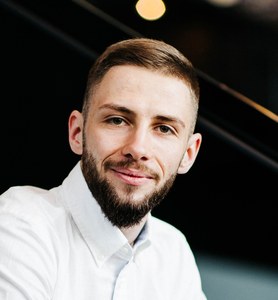
0:32I brought him on because I want to hear how agencies are using PPC OS and AI in general to do more with less. So, Denislav, welcome, man. Hello, everyone. Hello, Miles. Thanks for having me here. Yeah, man, good to see you. So for anyone who doesn't know you yet, can you just tell us who you are, what you do at Amplifize and what types of clients you guys help? Yes, of course. So as you said, my name is Denislav, and I'm head of the branded department of Amplifize, just supporting my team with some extra insights on the branded clients.
1:07And I've been doing digital marketing for the last six years, since 2020. And as you know, I joined Amplifize from your Google Ads masterclass back in the beginning of 2024. So since then, I fully focused on Google Ads for e-commerce.
1:36And yeah, about Amplifize, as you said, we are doing only Google Ads for e-commerce clients. And we generated more than 60 million in revenue for our clients. Currently managing around 100 active clients. And we are a team of 12 people. We have nine performance managers doing Google Ads part. We have one project manager. We have four is the owner who is doing the marketing side of the things nowadays. And we have a sales closer. And as you said, this year, everything changed a lot. And I'm spending my time more and more into the terminal.
2:22My team is also spending more time into the terminal using Clot. And we really see a lot of benefits and improvement by using the system. Yeah. So let's definitely dive into that. I want to give a quick shout out to Floris. I see he's in the chat. But you mentioned it, man. You guys met each other through the Google Ads masterclass a couple of years ago. I think you were his first hire, right? Yeah. Back then, it was only me and Forrest. And as I said, now we're a team of 12, maybe even more people.
2:59Yeah. Crazy, man. So yeah, for us, it's extra special because it's nice to see the progression that you guys are making. And also you in your own role. I know you did your MBA and you continue to level up. So it's cool to see, man. So yeah, you told us that in January, most of the things you did were still the manual way, the old way. Then around April, you started to embed AI in your agency. Yeah. Let's just dive into that. What did that process look like? And you started to build your own agency brain, which you integrated with PPC OS OS as well.
3:36But just take us through where you were first and where you guys are now and how that whole transition happened for you guys and what changed in terms of how you work and everything. Yeah, exactly. Yeah. Exactly. So at the beginning of 2026, let's say, we have been using different AI tools, but it was more into the manual way. You know, custom GPTs, filling in the data, giving a lot of files to the AI and still getting a good output, let's say. But when you introduce the PPC OS skills, I think around March this year, I immediately started using them.
4:18And I was very surprised how good they are because we had the SOPs for everything. We had all kinds of skills, auditing, search term analysis, etc. So I onboarded all of my clients and started using the PPC OS itself. And then after maybe a month or so, we really wanted to take Amplifize to the next step and see how we can provide more value to our clients by utilizing different AI tools. This is where we came up with the idea to build an AI system for the agency. And this is where we also hired an AI expert to really build this system.
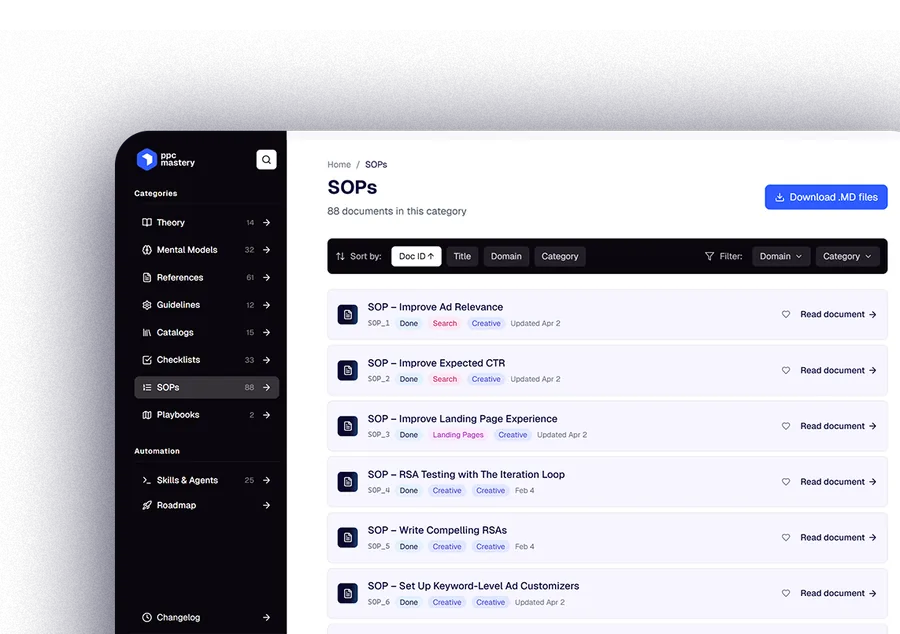
5:02So we are basically using the agency brain from Mike Rhodes. We are using the PPC OS skills from the PPC Hub. And we have developed a custom dashboard that helps our team to quickly seize the product performance and different areas that needs improvement. But I think the most important and interesting part is the agency brain. Because by using the PPC OS skills by myself, I honestly didn't expect much from the agency brain. But once it went live, I was really surprised by how valuable it is and how much time we can save and how much things we can do for the agency with it.
5:49Maybe it's important to note that it's different from the normal AI tools such as Claude or ChatGPT because it's synchronized. Everyone from the team is using the same context. And everything lives in a centralized place while, let's say, ChatGPT, it has your files on your local PC. And when I was using the PPC OS skills, nobody from the team was able to benefit and to use my custom skills or my SOPs or whatever else. So this is the real value for the agency brain, I think. All right, real quick, if you haven't already, can you please subscribe?
6:35I'm trying to grow the channel and it would help me a lot. All right, back to the video. Yeah. So what you essentially did is just build your own system so that you can all work from this in sort of in the same way, all synchronized throughout the team, right? So I think that's what you like. Like you mentioned, if you're working locally, then your team members, everyone is kind of doing it differently. Which is also how if you're working manually, like before AI, I guess it was also like that. You can have SOPs, but everyone was still doing it their own way to a certain degree.
7:09But I guess then with the system that you have built, you're trying to, yeah, just draw a line so that everyone is working in the same way, correct? Yes, yes, exactly. Yes, yes, exactly. And for example, every night we have an automatic data pool. So every morning when you go to the terminal, you will see the last 30 days of the accounts and everyone can seize that. And also if I create an SUP or create a custom skill, everyone from the team can access it within a few minutes, basically. And this is good because it's like a self-improving system, not only me, but if someone else do something within the brain, I will have the benefits from it as well.
7:57And like every feedback is improving the system. And this is good because the more you use it, the better it becomes, the better output and the more time you save by using it. Yeah, cool. So maybe we can just get into the specifics of how you guys use that system and how you've integrated PPC OS in it. Not necessarily about PPC OS, but just how a system like this has helped an agency like yours. As you mentioned, you guys have 100 plus or around 100 clients. That's a lot if you want to normalize everything and have everyone on the same page.
8:36But I can also imagine that the wins are very big because you are able to work much more efficiently using a system like that. So before we go into specifics, I want to ask about your audits, onboarding, how you optimize now as opposed to before. But maybe one step back is how would you describe the biggest benefit to you as an agency and for yourself as well within the agency of having a system like that? Is it just time savings? Is it being able to go deeper? Is it something else? What is it specifically for you that drives the biggest benefit from a system like this?
9:12I think for me personally, the biggest benefit comes from really having the data up to date. Because everything that I write to clot, if I want to have a short summary of the Slack channels of another team member, I can have it within a few minutes. Also, it saves me a lot of time with my optimizations, client analysis. I can build custom tools for my personal needs and the client needs. And I think this is the biggest advantage because everything is synchronized and everything is up to date. I forgot to mention that we have connected all of our tool stack.
9:55So the recordings with the sales calls and the client calls. We have connected the Slack channels, the CRM system and the project management system. Like all tools that we use, they are connected to the agency brain. And when you ask something, you have the output based on all of these data points across our work, basically. Yeah, cool. So maybe we can dive into audits now. You mentioned that audits are being done much quicker now. Can you just talk us through what the audit looks like now and how it's different than how you guys did it before?
10:38And is that mostly for audits, for example, for new clients or also internal audits? Or yeah, just your process there.
10:48Yeah, it's mainly for audits for new clients, potential clients sometimes. Before it was all manual, let's say by me or another team member. So usually what I did was I was just going through the account, analyzing the account, checking the conversion tracking, checking the product feed, the campaigns, if the account already have some active campaigns and taking notes by myself. Then with the draft notes, I created like a good template or just a good document that is ready to be sent to the client.
11:27But with all of these, you need to really go deep by yourself manually, which requires some time, especially if the account is already running and have a few campaigns, let's say. You need to really go deep so you can provide a good audit to the client. But now I recently did a couple audits for potential clients. The first audit was a bit more time consuming with the agency brain because I wanted to make it perfect. But the next audits were actually already, as I said, they already had my feedback.
12:02So we already had the same template, the structure I wanted to have, my tone of voice, the specific way that I'm writing and the things I would like to see in the audit. And what I did was I was using the PPC OS skills. I said to Claude, just use all skills you need to do this audit, analyze the account and give me the final version. In the meantime, I was going into the account, checking all things again manually. But it is a lot faster than doing it before. And once I have the final version from Claude, I'm just throwing my notes.
12:42It improves the audit. And actually, I had the final version within 30 minutes. The first audit was around 60, let's say, but because I wanted to make it perfect and just throwing the feedback there. But last week, I think I did another audit. It was around 15 to 20 minutes in total with a good audit. And because I used AI, I said to the sales guy, can you ask the potential clients for feedback so I can use this feedback if it's needed to improve my audit process or just the template or the information inside.
13:31But yeah, this is how I do the audits now. If it's internal audit, I still use Claude, but I'm not looking into how the document looks like.
13:44It's just more informal, you know, it's just more informal in a way. But if it's for a client, we try to really focus on the brand guidelines, follow the template and really try to give a lot of value. So we can close this client. Yeah. What is the tool stack that you use to run Claude Code? Do you use the Claude Code app? Do you run it within Cursor or something custom? I don't know. What do you guys use?
14:13I personally use Cursor because this is what I used when I implemented the PPC OS on my PC. But I know that some team members are just using the Claude app and it works actually the same. For me, it was just easier to keep using the Cursor because I was already having it on my PC. Yeah. And everything was already set up. But this was basically the tool stack Claude Code. You can use the app and that's it. Yeah. Yeah. It's crazy, man. One subscription and then you can do so much with it. You get so much more value from it than even the max plan of $200 per month.
14:59You mentioned though in the audit you said that Claude was running the skills and then you were doing some of the manual checks. Do you do some sort of hybrid type of auditing where you still run a few manual checks? Or was it just for that one time? No, I still do the manual checks. But I'm checking the most important areas. Let's say the conversion tracking. If we have campaigns running live. Because most of the time you see the same mistakes over and over again. Let's say branded terms into the prospecting campaigns.
15:35Conversion tracking, having multiple primary conversions, inflating the data.
15:45And just some things like that that are usually always the case. So I'm going through these steps. The main and the most important ones. I'm sharing my strategy and my view of the account. If I'm taking over the account, how I would proceed from now on? What would be the strategy? How I would approach the account? And all of these notes that I'm taking, I'm just sharing them with Claude. And the final document is ready, as I said, within maximum 30 minutes. And the good part is that it really follows my tone of voice, my way of writing.
16:23So if the client comes to start working with us, then they won't even notice that I was using, let's say, AI to do the audit. Because it already has my tone of voice, my way of working, how I'm even sharing the messages. Like the specific structure. Let's say I'm using emojis. I'm using bullet points. So we have a file with a tone of voice for every team member. Good. Because the other team members are communicating in Dutch, let's say. Yeah. So we have that personalized for everyone. Nice. And so in terms of optimizations, what are you still doing manually?
17:10Or where do you draw the line between what you do versus what AI does? Not only with audits, but just in general when you're working for your clients.
17:21I'm still doing the optimizations by myself.
17:25What I do with AI is to every morning have a quick check on the accounts. See if there is something urgent going on without the need of just going through the interface for every client. If everything is going well, I can just analyze the results quickly. Because usually we follow a certain roadmap, a certain strategy. And if changes are made, it's not needed to go into the account every day and to really make another change if it's not needed. So that's why I'm just checking with Claude if there is something urgent going on.
17:59I'm summarizing my Slack channels just to get that information as well. But when the time comes to make the real optimizations and the real strategy, we are the ones who are doing it. What I use Claude also is to just when I have some free time to really think about potential ideas. Things that I might have missed and to really go deep in the account and see some potential opportunities, specific keywords, specific campaigns that we can do. What our competitors are doing and get some ideas as well.
18:37But this is basically I'm using AI to support my strategy to save some time. But the real optimizations are still executed by the team. And I think we won't let AI to do the things.
18:56I'm already testing to use AI for, let's say, build the campaigns and stuff. But I'm always reviewing the final outcome before publishing anything or before sending something to the client.
19:11Yeah, I think that's probably smart. Because you never know, man. AI can and will definitely make mistakes. So it's always good to double check those important settings, budgets, make sure everything is all right. And how about setting strategy? Because you're also responsible for creating roadmaps, right, for your clients? Yes.
19:34How have you started to integrate AI in that process of creating roadmaps?
19:43It's quite similar with the audits. Every quarter we are building a 90-day roadmap strategy for our clients. Because we would like to see a clear plan of action for the next 90 days. Both for the team and both for the client to have a clear plan of what's going to happen in the account. And how we are going to reach the goals.
20:10But every quarter, as I said before the start of the quarter, we are creating a roadmap. With the specific changes that were made in the account over the last three months. We are creating some lessons. For example, if we tested certain things and they didn't work, we push this to the roadmap. If some things are working well, we are also mentioning that. Just a performance summary. And then we are building the action plan for the next three months. In Q3, we are still doing that completely manual.
20:43So for every client, as I said, we use the same structure. But we write everything manually. And in Q4, we already used AI to help us with that. As I said, we used a similar way with the audits. So we explain our strategy, explain what we would like to see. And then Claude was helping us with the final document and the finalized version, basically. In Q3, I remember that it took me like a week because I didn't have the time to sit the whole day to create the roadmaps. I had around 10 clients. So I did one or two roadmaps per day.
21:26So around five days, I was ready with the roadmaps. In Q4, we started early. So by the end of August, we had the Q4 session, planning the Black Friday, the promotions, budgets, things like that. And with this recording of our meeting, I was able to create the roadmaps in two or three hours for all of my clients. Because we discussed everything in the meeting. Then the agency brain had the data. And we really executed the strategy and developed the roadmap in just a couple of hours for all clients that I had.
22:11But still, as I said, I'm explaining my idea in advance. I'm explaining my thoughts and just throwing them to Claude. And I have the final ready to send documents in a couple of minutes, usually. Yeah, nice. And in terms of reporting, because I think this is always one of the things that everybody hates. You have an interesting approach, I think. Can you just explain how you do reporting now? Especially your approach to proactive reporting, which I think not everyone does the way they probably should and can benefit from that.
22:52Yeah. So, yeah. Always in our team, we focus on the good communication and having proactive updates, keeping the client up to date. Because the majority of the clients that come to Amplifize, we have a certain questionnaire that they need to fill. And we have a question about previous experiences. And for the majority of the clients, they fill out this question about not good communication with the previous agency. Or just the agency didn't communicate well. Or they were lacking the updates. Sometimes lacking the changes in the account.
23:35And because of this feedback from the client, we always focused on having good communication. And with good communication, we saw that sometimes even the results are not perfect, like missing the targets. Let's say clients are still staying for a long time because they value the cooperation itself and the work with the specific performance manager.
24:00So we had reports every Tuesday. Every first Tuesday of the month, we had a monthly report and a call with the client. And during the other days of the week, we were sharing proactive updates based on the results, based on some things that we would like to test, etc. But since last month, we decided to even improve our communication by having three updates per week because of AI. How we did it? Because if you need to write three updates per week for all of your clients, it's quite time consuming.
24:42What I did, we built a custom skill where Claude is automatically, proactively sending the draft report in our team channel. We have the report ready to send. We have some opportunities below that. We have a section with things that you need to check before sending.
25:06And we have just a good summary of the report. And most of the times you just need to copy and paste it to the client channel, which takes you just a few seconds. And what I did to keep improving this workflow and to make sure that we are having the good report out there without the need to constantly changing the words or whatever. Every performance manager can share their feedback under the message in the team channel. And Claude will take this feedback into consideration. And next time it will improve the report based on this specific feedback.
25:46And as I said, all reports are based on how the specific performance manager works, how they communicate, how the client communicates. And it's really personalized. And as I said, you can't even notice that it's written by AI. Yeah. But for us, it saves us a lot of time because you just need to copy and paste the report. You mentioned it personalized for the clients because some clients prefer email, some prefer quick updates in Slack. You mean that way? We try to centralize our communication in Slack.
26:24We have just a few clients communicating via email. I meant more about the tone of voice and the way of communicating of the client because we have more mature clients that prefer professional type of communication. We have more young people that are just more informal. And this is the personalization I meant by the report. So following the whole Slack channel mood in a way.
26:58Yeah. Yeah. It makes sense. And what about creatives? Because I know you guys with Econ and Black Friday coming up, we're going to have to be using a lot of creatives, testing a lot of creatives.
27:10Because you mentioned that it takes a lot less time now with AI and you don't necessarily need a designer. Can you just talk to us about that? In what scenarios do you still need a designer? Maybe sometimes you do, sometimes you don't. What do you think of the quality of the creatives that you make with AI? And what does that process look like in general, creating those creatives with AI? If you can just talk about that a little bit because I think it's something that many specialists still struggle with.
27:41Because there's also some question like, yeah, whose responsibility is it? You know, you, the client. So, yeah, your approach will be super good, I think.
27:52So, recently I had a new client, a smaller client, a Swiss supplement brand basically, who is just at the beginning of their journey. And I really wanted to provide as much value as possible for our clients. So, usually we don't do creatives, we don't do landing pages or things outside of Google Ads. But when the client will value it, let's say, and it won't cost us too much time, we can do that. And I really wanted to help this client because it's a really nice brand to work with. And I want to improve the results within Google Ads, of course, and to scale the business.
28:34They had a Halloween promotion and it was scheduled a bit from nowhere. They just decided to run the Halloween sale and we needed to act quick. And I said, hey, we'll run a pMax for the specific promotion, but I would like to have it full built with the assets, ad copy, images, everything in place. So, what I did, the agency brain already had the full context of this client. It was knowing that we will run the pMax. And I just said, hey, I need a very good prompt for Gemini to create images for this pMax for the Halloween promotion.
29:17And I had the prompt. I throw it to Gemini. I used one product image with just a clear background. And I had 20 images in all sizes for the pMax, perfectly designed for this campaign within 20 minutes. But I was waiting for the images to be generated most of the time. As I said, the prompt was very quick to get it.
29:49And for which clients you can use it, I think this is mainly for smaller clients. Because we have big clients. We always also try to provide more value. So, we say, hey, if you need creatives, landing pages, just let us know. But they don't want us to do that because we are specialized in the Google Ads part, managing the campaigns. And they have a designer team. They have a conversion rate optimization team, for example, or freelancers who are mainly specialized in this. Especially for creatives.
30:24The big brands value to have their brand guidelines followed and just to have the designs created by their team. But for small clients restricted by budget with limited time, I think it's very useful just to help them this way. As I said, using Gemini to create images. The prompt was from Clot.
30:52Maybe even we can do something extra with Clot about creatives, but we still didn't build it.
31:00But as I said, in 20 to 30 minutes, I had the pMax ready to run with images, add copy, and everything. Yeah. And then at least they're better than the auto-generated videos, right? So, even if it's not like the designer level, it's always going to be better than what Google creates. Yeah, yeah, exactly, exactly. So, just so I understand a little bit at Amplifize's, do you have, if you're working on a client, do you work on that client by yourself? Or do you have like a strategist and then the executor roles?
31:36Or is it the same person who is client-facing is also doing the work? What does it look like for you guys?
31:45Yeah, so the performance... Sorry to interrupt. Not even client-facing, I mean, but more so, is there someone involved on strategy? Or is that the person managing the accounts also doing the strategy? Sorry, you go ahead. Yeah. Usually, we have the performance manager who is responsible for everything. Client communication, strategy, execution part, communication then. So, one person is responsible for managing this client. But we as a team, we have a team meeting on Monday where we discuss all clients that need attention.
32:19And also, we have two people, which is one me, helping the branded clients, like the established brands. Because this is how my experience within Amplifize develops. I was just managing more branded accounts. So, I have more experience in that. And I'm supporting my team with proactive ideas. We are scheduling certain calls to brainstorm accounts that need attention. I'm sharing some ideas as well, like just what I will do if it was my account. And every Tuesday, also, I'm having a meeting with the project manager, which we are also looking at accounts that might need attention.
33:07I'm doing an audit for these accounts. And there is another department, which is the dropshipping. And there is another team member who has more experience in that. And he is supporting the whole dropshipping department because it's just different. But this is usually how it goes. Forrest is also joining these meetings. So, we as a team just provide the strategy as a whole. But there is one person actively working within the account. Yeah, cool. And who does the contacts gathering since you have the agency brain?
33:44Does the responsibility of gathering the contacts? Let's say, for example, you hire a new client, onboard a new client.
33:51Who then does the contacts gathering in the initial phase? Is it just the person, let's say, you start or someone in your team works on that client? Is the responsibility then with them to make sure that all the contacts is coming into the system?
34:07Exactly. So, when we have a new client, everyone from the team can just... The client goes directly into the agency brain itself from Monday because it's there. We have the onboarding questionnaire. It's going to Monday. And from Monday, it goes to the agency brain. But for the PPC OS, I forgot to mention that we don't attach it to every client folder separately. We have it centralized within the agency brain. And when we have a new client, you just write a command PPC OS attached client name. And the PPC OS skills are already attached.
34:49And since then, you start gathering the context, filling in the context for the client, such as budgets, KPIs, previous experiences, goals, etc. And it is responsibility for the specific performance manager. If someone needs help with certain things, we have roles within the agency brain. Forrest is the owner. He sets the vision. He can control everything. And then we have three scouts. One is the AI expert who built the system. He is still supporting us every Friday with our questions and so on.
35:27I am another scout and there is one more team member who is also a scout. And the scouts can just do the changes. Because to keep control of the agency brain and to have everything working well, only the scouts can make the changes. And the team members cannot do. They can suggest changes. We see them in the app. But they cannot go by themselves and just change the rules or change the SOPs.
35:59So, yeah. If they need help, I can go and support them with the context. But usually, it's from the Slack channel. It's from the onboarding questionnaire. And that's how we gather the context. Yeah, cool. So, man, I think we can talk for so much longer about this. Because there's so much more to unpack. But it's been cool already hearing what you guys are doing. Just in terms of your outlook on the future. I think a lot of specialists are fearful that their job may be gone soon. Whereas, on the other hand, when I'm talking to people like you in the PPC Hub who have started to use PPC OS, their own systems.
36:38I feel a new energy of excitement. Also, with Robin before this, he said that he's enjoying his work much more now than before. Because it's all new. And you feel like you have superpowers sometimes. What does your outlook on the future of Google Ads Specialists and PPC look like in general? Especially since you guys are also going through such transformations with the agency. You know, focus only on Google Ads. Doing other channels maybe. Yes or no. Making those choices. What's your personal outlook on the future of our industry and work?
37:13I personally think the role of the Google Ads Specialists will become even more important. Of course, you can do a lot with AI. You can let AI run your account.
37:32AI can be confidently wrong. It just amplifies your skills, your foundation and your knowledge. So it can tell you things that could not be the right thing to do in the specific case. It cannot understand the client how they feel. And it's really important to keep your expertise, to keep your skills up to date and to really guide the AI to what you would like to do. I think in a way what we are already doing. We are drafting our notes. We are drafting our strategy and sharing to the AI just to save us time with creating the document, let's say.
38:17But still, everything goes through us. We never send something directly through the AI. We still have the human judgment in place. And I really think the value of the Google Ads Experts will become even bigger. And for me, it's also really interesting to work within the terminal to use Claude because you find some things that you probably won't even find by yourself sometimes. It's very good in deep insights. It can find tracking problems very easily. Things on the website like the shipping policies, return policies.
39:00So I think that the role of the Google Ads Specialist will become into more guiding the AI and navigating how to use the AI. But if you don't know what you're doing, AI will just mislead you and things can go horribly wrong, I think. Yeah, I like that framing. AI can mislead you. I think that's super accurate, man. And that's why it is still so important to continue to level up as a specialist. All right, Dennis, my final question for you is the same that I had for Robin. What would you say to someone who is fearful of AI or someone who hasn't really started embracing AI in their daily work yet?
39:45Just do it. I would say just do it. As I said, I was using the PPC OS. I honestly didn't expect much from the agency brain. But since we started using it, it's just been a game changer for the agency. I can't even imagine how good it is because I just write a simple sentence in the terminal and I get a very good output. For me, it's also very interesting to build custom solutions. I built a custom dashboard for the branded clients. I see the KPIs. I can see the change history. I can see everything within one dashboard.
40:24I'm not a developer, but I created this good dashboard for me. It works well.
40:31So I would say just give it a try.
40:35But make sure that you set it the right way. Feeling the context. I know the previous guest said that. Context is king. I would confirm that. Because the agency brain, the real difference is coming from the context itself. All tools connected. The context for the agency, the goals, and the client context itself. And you have one very powerful system that knows everything for the whole agency, for every client, for you.
41:09So it can save you so much time and you can do a lot more with it. Just give it a try. Okay, real quick. Do you want to deeply master Google Ads and drive better results faster with AI-powered systems? Then join the PPC Hub. Inside, you'll get the training, our Google Ads success path, the systems, PPC OS, and a community of over 2,500 specialists from all around the world to build deep expertise, deliver the best possible results, and stay ahead no matter how fast the industry changes. Just click the link below and then I'll see you inside.