What you'll learn
- Put your SEA and SEO data side by sideCombine keyword data from both channels: clicks, SEO positions, and the conversion and revenue data per keyword that only Google Ads has. That's where you spot the gaps.
- Test pausing ads where you already rank wellIf a keyword cluster ranks really well organically, competition is low and your ads still take all the clicks, test pausing those campaigns. The budget can then go to other non-branded campaigns.
- Set up a recurring SEO and SEA meetingMonthly or even weekly, depending on the size of the company, with a quick update from each side. Diantha sees it click after three or four meetings, once people notice the other team can help them hit their own targets.
- Check which URLs your ads send people toAt one client, the best performing URLs in the SEA campaigns were filter URLs that weren't indexed. Once the merchandisers created static URLs, the site also gained organic visibility.
- Let your ad landing pages be indexedA lot of SEA teams put a noindex tag on their campaign landing pages. Diantha's take: if a page works that well, let it rank in organic search too, because an SEO visitor also deserves a clean page.
About this episode
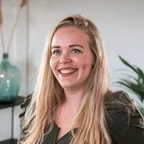
Diantha van Surksum and I worked at the same agency in Amsterdam and Groningen.
She went on to become the first SEO specialist at Beerwulf, Heineken’s startup, and built the SEO team there. Today she runs her own company, SEO Spot.
When I started at that agency in 2018, nobody talked to each other across channels. Diantha still sees those islands in a lot of companies, even though Google Search is one environment and both teams target the same people.
In this episode, we go through how to change that:
- What you find when you put your SEA and SEO data side by side
- When to test pausing ads on keywords where you already rank well
- The recurring meeting that gets both teams working together
- The four pillars of SEO every Google Ads Specialist should know
- Why she’d let your ad landing pages be indexed
- What AI Overviews and AI-made content change for both channels
My key takeaway: once you break those silos, the other team can help you reach your own goals too.
Chapters
- 00:00Introduction to data visibility and collaboration
- 00:30Welcome to The PPC Mastery Podcast
- 00:43Guest introduction: Diantha van Surksum
- 01:12SEO and Google Ads synergy
- 01:48Diantha's career journey
- 03:15In-house vs. agency experience
- 04:50Breaking down silos in digital marketing
- 06:27Combining SEO and SEA data
- 09:35Practical collaboration tips
- 17:18SEO fundamentals for Google Ads Specialists
Mentioned in this episode
Full transcript
Read the full transcript (5,451 words)
Auto-generated from the video, so expect the odd typo. Click a timestamp to watch from that moment.
00:00If you have that data and you make it visible, and you are not only looking at your own SEA data but you try to combine it and place it next to each other, that's the moment that you see the gaps. Oh my god, you can learn so many things about that. But you really need to have that open mindset, because it's so easy to just get stuck on your own island and to stay with your own SEA team, for example.
00:28All right, welcome back everyone to The PPC Mastery Podcast. I am joined today by a very special guest, because the lady that you're about to hear from now is an ex-colleague of mine. We worked at the same agency in Amsterdam and Groningen. So it's my pleasure to welcome Diantha van Surksum to the show. Welcome, Diantha. Thank you, Miles. What we're gonna be talking about today is something different than usual, because you are an SEO specialist, not necessarily a search, paid search or PPC specialist. But I know you have a lot of experience with broader marketing strategies, and you understand how Google Ads and SEO work together. So I wanna dive into how Google Ads Specialists can actually leverage SEO data to make better decisions, optimize better, etc., etc. But before we do that, could you maybe introduce yourself? Tell everyone who you are, how you got started with SEO and where you are now in your career.
01:28Of course. First of all, thanks for the invite. It's super nice to be here. And it's so nice that you want to involve SEO in this podcast series, instead of only SEA, because in the end, Google Search is one environment. And yeah, my name is Diantha van Surksum. I started with SEO in 2016, as I shared, at a consultancy agency where we were colleagues. I started with a one-year traineeship where SEO was part of it, but also other tracks like SEA, like social, like CRO. And at the end of that year, it was clear for me that SEO gave me the most energy. And it was fantastic for, what was it, two and a half, three years, I guess.
02:27After that, Heineken called me, because they started Beerwulf, a startup, and I was their first SEO specialist. And I had the honor to build that team for four years. And after those four years I thought, okay, this is such a machine now, everything works so, so smooth, I can also do that and execute that for other organizations. So that was the moment that I started SEO Spot, my own company. And right now I'm trying to help other organizations, mostly international ecommerce webshops, to gain as much visibility as possible through SEO, but also combined with SEA.
03:13Yeah, awesome. I think your experience is very valuable in the sense that you started at an agency, so you have a lot of exposure to different markets, different industries, different channels, different people. And then going in-house, going really deep on the SEO side. Did you notice that when you worked in-house, you approached it differently, or went much more in depth? Yeah, definitely. I think all consultants will recognize that you... it's so... how do you say that? You have a specific amount of consult hours for an organization. Oh yeah. And mostly that's way too little for what you really want to achieve. And the moment that I went to an in-house organization, yeah, I had 40 hours a week. And that, wow, that opened up a whole new world for me, because I had so much time to go in depth and to really talk with everybody within the company as well, to get the most out of everything.
04:23Yeah, that's definitely super interesting, and I remember that as well from my perspective. I never worked in-house, but after I left the agency, I had my own clients and I worked with them in their office, etc. And I got much more integrated in the organization, and you learn so many things that you don't really learn at the agency when you have a few hours here. So that was super interesting. From your perspective as a hardcore SEO specialist, how do you think SEO and Google Ads Specialists can complement each other in a digital marketing strategy? Yeah, in many ways. I think, first of all, as an SEO specialist, but also as an SEA specialist, you need to start with the basics. The fundament of that channel should be strong enough. And from that point on, it's time to talk with each other and to try to achieve as much as possible together as channels. Because if you start too early with that collaboration and the fundament is not correct at that moment, it's gonna be so difficult, and you'll spend a lot of time on things that, yeah, that is a shame.
05:49From the moment the fundament is built correctly, I think it's all about data and an open mindset. It's not all about your own targets, your own SEA targets, your own SEO targets. Like I said before, Google is of course one environment. In the end, we target the same people. Sometimes it is of course an ad which will always win in terms of visibility over an SEO result. But if you have that data and you make it visible, and you are not only looking at your own SEA data but you try to combine it and place it next to each other, that's the moment that you see the gaps. And oh my god, you can learn so many things about that. But you really need to have that open mindset, because it's so easy to just get stuck on your own island and to stay with your own SEA team, for example.
06:58Yeah. You mentioned you put all the data next to each other and you see the gaps. What is that? What do you mean with that? Gaps in terms of keyword coverage, or what is that? What do you mean with that? Yeah, you have several exercises that you can do with this. For example, a keyword analysis, very basic. And not all the data from an SEA point of view will be visible that you need, for example because of the pMax campaigns, which won't give you keyword insights. But you still have a lot of data from an SEA point of view on keyword level, if you want to combine that with the SEO keyword data that you have. So for example, that can be clicks, that can be of course SEO positions, but also think about the conversions. SEA specialists have conversion and revenue data available on keyword level, and SEO specialists normally don't.
08:09And if you lay them next to each other, you see, for example, that for specific keywords, specific clusters (I prefer to talk about clusters instead of individual keywords), if you see those cluster performances, that SEO is ranking really well, that the competition is really low in the complete Google search environment, and SEA is generating all the clicks and therefore of course also using the budget for that. Why shouldn't you start a test to see, yeah, what happens if you just pause the SEA campaigns? And then the budget will be there to use for other non-branded campaigns, for example. You know what I mean? And that is just one example of keyword data, but you can go much further than that. For example, with metadata tests, which you can do as an SEA specialist way more easily than an SEO specialist. So, meaning headlines? Meaning headlines, yeah. Exactly. So there, it's a two-way street here. SEA specialists can learn from SEO specialists, but also of course the other way around. Nice.
09:35So, I guess the next question is then: do you still see a lot of silos in organizations that you work with, or is it becoming more integrated now? Because I remember when we both worked at the agency, I started in 2018, nobody was talking to each other in terms of different channels. How is that now, from your experience? I think it's really depending on the company. Sometimes a company is already breaking those silos, because upper management level, for example, is really focusing on breaking those walls. But sometimes, yeah, the islands are still there. And it's so easy, what I've just said as well, to stay on that island. It's totally logical if you are having a great time with your team and there is a very good SEA specialist, for example, where you learn from, and that specific SEA specialist is also really focusing on their own SEA targets. Yeah, of course, then it's less easy to talk with other SEO specialists within the organization.
10:46Yeah. So how do you then break those walls, if people are saying, "No, my Google Ads targets, your SEO targets"? How do you bring people together? A very nice thing that works for me is when I enter an organization as an SEO freelancer. Of course, everything is new to me. I have a fresh point of view, so it's easier for me to step out of that SEO team and firstly talk with other disciplines, for example SEA specialists as well. The first thing I always try to do is organize a recurring meeting with the SEO and SEA specialists right away. It should be monthly or even weekly, depending on how big the organization is. And sometimes it's a little bit... yeah, I don't know how to say that. Yeah, of course time is precious, and people think it's not that important and that they have more important and more impactful things to do in that time.
12:03But I really notice that after three or four of those meetings, people really understand, "Hey, okay, if I share those insights from our point of view, maybe they can help us," right? And that is such a nice moment. That's a good one. Because then your targets are influenced by me and my targets by you, and then of course there's a shared target. But the ones who are still looking at their own targets still know that they need to work together, because working together with you, I hit my target. Oh, interesting. Indeed, indeed. Very nice. Hey guys, real quick, if you like this episode, don't forget to subscribe so you don't miss anything in the future, and feel free to share it with a friend, colleague or family member. That's the only way we can grow this show. Back to the show. So in some of those recurring meetings that you have, say you have this weekly or monthly meeting with the SEO team and the Google Ads Specialists, the SEA team, what are things that you would typically discuss, just from your experience?
13:09For example, the best performing campaigns or landing pages, or specific KPIs, which of course are different for every organization. But the last time, I recognized at one of my clients that the best performing URLs in the SEA campaigns were filter URLs. Those filter URLs are URLs with a question mark and a filter, which were not indexed for the organic search results, because they contained a canonical to the parent URL. When the SEA specialists showed the SEO team the best performing URLs, and we as SEO specialists saw that they contained filter URLs, we were like, "Huh? But why do you use filter URLs? Are there even static URLs for that?"
14:29For some of them, there were. So they were just not, they were just not, how do you say it, familiar with the fact that they should have used the static URLs, and that all the value builds up on that URL. So yeah, that was super interesting, that from the moment that we asked the merchandisers to create the static URLs in the end, we saw that we also gained organic visibility afterwards. Interesting. So you discuss things like, I see here that you can do your headline test, like you said, the meta tags. Yeah, I'm a complete SEO noob, so correct me if I say something that's not right. You discuss URLs, different keywords, different clusters, search terms. Anything else that you typically discuss in those settings that is relevant for both SEO and the PPC team, the Google, Google Ads guys?
15:36Yeah, what you also see is that normally the updates SEO specialists share in a normal SEO team update are like the Google core updates, sometimes specific search results, how the build-up will be changed, stuff like that. But then it really stays with SEO updates. So what we also do is the SEO specialist shares updates about what is going on in SEO land, and the same for SEA. And normally you would think that, yeah, Google updates are almost the same, right? Because it's the same environment. But in the end, you see that the updates from the two different teams are super different, also because of new features that SEA can use, or new betas that are now being tested in America first. So that gives a much bigger picture than only staying within your own discipline.
16:37Yeah, yeah, makes sense. And in terms of data, what are some data points that a Google Ads Specialist can look at in terms of SEO data? What are some data points that are interesting to pay attention to? What do you specifically mean with data points? So for example, Search Console, which you specifically mentioned, that you put the different search terms or clusters next to each other and try to identify the gaps, or other data points. And the reason I'm asking is also because I have no idea what you look at exactly in SEO that might be relevant on the other side. Maybe let me rephrase that and ask you this: for a complete SEO noob, for a Google Ads Specialist like me, what are the most important things that I need to know about how SEO works, so that I understand how we can work together better?
17:37Yes, actually there are four pillars, in my opinion. Firstly, technique, of course. The page needs to be accessible for the Google bots, and of course also for the visitors, so it can be indexed. Next to that, you have content. The question that is asked needs to be matched with the content on the website. Next to that, user signals: after landing on that page and asking that question, are the user signals positive or negative? And lastly, authority: how much link juice did you get from other external domains, because they linked to that specific landing page? In my opinion, in the last few years, the third pillar, so user signals, is getting way, way, way more important. Because in the end, who can tell Google best if the answer which was given on the landing page is the best answer to the question they asked? That is the user, right?
19:02So in the end, of course, technique is really important. It needs to be accessible. After that, content: you need to be aware of all the questions, whether it's informative or really about products. But in the end, the user signals are everything. So visitors, visitors and visitors. SEO stands for search engine optimization, but in my opinion it shifted a little bit more in the last few years to search experience optimization. And what does that mean? That you really need to focus on the experience the visitor has. For example, this always gives me a bit of goosebumps, and I'm really curious what you think about it.
20:04When I enter a new organization and I recognize that SEA specialists create specific campaign landing pages which contain a noindex tag, because they say, "Okay, these pages should be really clean and it's all about the conversion. There should be as little content as needed, because we don't want that distraction." Right. What do you think about that? If I understand correctly, you mean just using a separate landing page for the ad from what you would use for the organic result. Yeah, I tend to agree, if the goal is to get a conversion as fast as possible. Because you always see, like, the more options you give people, the more likely they are to click away, which is technically what you don't want. However, it's also something that I'm actually thinking about a lot recently in terms of branding.
21:17Well, there's always this debate between branding and performance, and with performance you always want direct response. You know, you just want someone to click on the ad and convert right away. But we also know that people need a lot of touchpoints in order to make the decision to buy, unless it's like a super simple product. But the more complex a product, the more touchpoints there generally are. And if you have, yeah, I don't know, like a blog or a YouTube video or something like that that describes the product in more detail on the landing page, you can also think, like, for branding purposes it's actually fine, because there is a chance that they will come back in the future, because you educated them on how it works or why it's better than competitors, etc. But looking at it from a pure performance perspective, then I would say no, make everything unclickable, no clickable logo, remove all the distractions and go straight for the sale.
22:14And I guess if you're, you know, if you're performance-minded and you have a budget that needs direct, specific ROAS on the other side, then it makes sense that you want to do that. But from a branding perspective, I'm looking at it a little bit differently. For example, in our business, I like to give myself a... yeah, the conversion doesn't have to happen immediately for me to be happy. But if I'm working with a client, especially in ecommerce, you know how fast-paced it is, it needs to happen directly. So that's my take on that. But what's your take then, from an SEO perspective? Yeah, I think, again, getting back to it, it's all about the user. It's all about the visitor that you want to help as fast as possible. So I totally, totally agree that we shouldn't put any content on landing pages that distracts and wouldn't help the visitor in the end.
23:11But the thing is that normally when I see landing pages that are created specifically for SEA campaigns but also get a noindex tag, so you really want to keep it away from Google and not index it via organic search results, why would you do that? Why would you do that? Because in the end, an SEO visitor also deserves a really clean and clear page, right? Right. So if you... because getting back to your example, of course a product page, a PDP, should be as clean as possible. Yeah. But if a person needs a little bit more explanation about the product, or what you just said, that feeling for the brand and stuff, that is just one step higher in that whole customer journey. It's more in the think phase, right? Where the PDP is already, yeah, straight in the do phase. So you have a page where you can explain more about the product over there. It's just not the same page. And that is what I sometimes see in other organizations.
24:27And I know that there are of course exceptions, and some of the people will also think differently about that. That's totally fine. But I think, why should you create a specific SEA page? If that works so well, please let it be indexed for the organic search results as well. Fair enough. Yeah, it's probably because there's money involved, and then everybody just panics. Different ways of looking at it then. If you have organic results and you just... I also always have the feeling that with the ads, the ad results, it's always like we need a direct return. And with SEO it's kind of like, "Oh, that's nice, that's a little bonus, because we get that for free anyway." Yeah, yeah, exactly. And that is such a shame. Because if you talk with each other and think about the main KPIs, like combined Google search KPIs, you can achieve so much more together. But you need to start talking to each other then.
25:33Yeah, interesting. Do you think that SEO and the ads should generate different types of traffic? So let me rephrase that. For example, would you say that with your campaigns, your Google Ads campaigns, you focus more on bottom-of-funnel keywords, because they are more likely to get conversions, and with SEO focus maybe a little bit more on the middle of the funnel, top of the funnel, in terms of keywords and search terms? Or is that just a myth, a fallacy? No, I think it's more depending on how the environment then looks. What about your competitors? Sometimes you have products in your assortment that none of the other organizations offer, so then you are the only one who can bring that product to that user at that moment. Yeah. If there are no ads running at that moment and you are already visible on position one with your SEO results, why would you... why should you run ads then? So that would be the exception.
26:47But normally, yeah, normally you will see that the SERP is getting busier and busier, and there are more and more ads nowadays. And normally you only want to spend a single euro or cent on clicks when the chance is that high that people in the end will also convert, of course. Yeah, yeah, yeah, makes sense. Speaking of the SERP and how that all is changing, you mentioned it's becoming more like search experience optimization. Last year, one of the bigger buzzwords was SGE, Search Generative Experience. Have you seen the relationship between SEO and SEA, Google Ads, have you seen that evolve as Google introduces more AI-driven changes to the search results? What do you exactly mean with that? The search engine is changing, you know. There are AI Overviews. I don't know if it's rolled out across the world, but a lot of them, especially in the US, are testing it on the Shopping tab as well.
28:06As you search, for example, for winter coats, you not only get the regular search results, but there's also AI-based information, which is often not leading to a landing page. So on the one hand, that's how AI is integrated in the search engine. But on the other hand, there's Google, you also mentioned Performance Max. Everything that Google is releasing now is heavily driven by AI, and we kind of lose even more control because of the automated targeting, etc. And yeah, I'm just, I'm just curious, just from the SEO perspective, do you see that that is changing how both channels can work together or not? Because let's say if you rewind it 10 years, you had a set of keywords in your search campaigns with Google Ads and it's super clear. You target those keywords, you see all the search terms, and then you can compare that with your SEO data, and then it's pretty, pretty obvious. Now it's so, it's so complex. Does that bring any challenges, or how do you look at that from the SEO perspective?
29:15Yeah, of course that's very challenging, also because what you just mentioned is not rolled out worldwide yet. So most of those tests run in America at the moment. And I'm really curious how all those types of AI-driven search results will be reported back to us. That is the question at the moment, because it's kind of a black box at the moment. It's so much... yeah, we have to assume so many things. And that is of course not... yeah, we as SEO and SEA specialists love data. We want to make decisions based on not only what an organization wants, but also on what we see in the data. So that is definitely gonna be... is already challenging, but is definitely gonna be challenging even more. Because the thing that we see happening right now in America is that Google transforms a little bit more, if we're talking about more product-related queries, into a product listing page.
30:33So normally, if you as a webshop performed really well with your product listings via organic search results or SEA results, it's gonna be a tough, tough cookie the upcoming time to get traffic to your website. But yeah, it's super, super interesting, because in the end, I'm also not sure. A lot of people say that this whole AI thing is kind of negative, that a lot of content is created that is mediocre, and that of course impacts everything that's indexed in Google. But in the end, I think it's also a good thing, because websites and webshops are really pushed to think about, okay, what is it really that my visitor wants? And I really need to add value on top of that mediocre content, making sure that you as a website or webshop will still be visible and generate very relevant traffic.
31:56So it is more hard work, I think, to get the same visibility that you have right now, but I think it's actually a positive kind of thing. Yeah, yeah, probably. If a lot of businesses are creating such mediocre content... I see that on LinkedIn as well. It's so easy to spot when people have just used AI to create a post or to create comments. I think it's kind of... it's an interesting discussion, an interesting development, because you would say that such crazy technology would make us all incredibly smart, much smarter than ever. But then some people are actually becoming dumber, because they are relying on those types of tools without a solid foundation or understanding of how it works. And then you see that it's spitting out this mediocre blog, and you think, "Oh, I created that in 10 seconds, nice, let's upload." But then on the other side, a user sees it and just thinks, "This is unusable, and I'm going to someone else who has better information and better education."
33:06And then it all comes back to what you just said, like the user experience, or, yeah, I don't know if you mentioned it like that, but the signals. That's what it's all about in the end, making sure the user has a great experience. Yeah, exactly. And at the same time, if it's so easy to create within seconds, then your competitor can do it as well. So if you really want to be different, you need to be way smarter than only using AI. You need to really add value in a different kind of way. Of course, AI can help you in a lot of ways. For example, I'm now testing AI stuff for creating metadata. Sometimes a lot of content specialists, for example, are super busy with rewriting a lot of meta descriptions, in a time that Google is not even showing the meta descriptions that you upload eight out of ten times. So you just need to use AI right now in a very smart way, where you're sure, okay, it will save me time and it will add value. But there are so many fields where I would stay away from AI.
34:23Yeah, absolutely. Okay, cool. I think that gives a lot of context on how SEO and SEA complement each other. If you can just give one or two tips for Google Ads Specialists who are thinking now, like, okay, maybe we should do more with our SEO team. What are one or two tips to summarize this, on how to break the silos and start working together as a unit, instead of just you with your own targets? Yeah, where we started with this podcast: I would definitely organize a recurring meeting, and please attend, also if you don't have the time. This should just be part of your work as an SEO and SEA specialist. Try to make it structured, so everybody needs to give a quick update from their field.
35:32And yeah, I would still say, please share the best performing URLs, campaigns, whatever you were focusing on within your team, and share that with the SEO specialist, and ask to do the same for the SEO specialist as well. Because it can give you so many insights, and you can play around with each other, help each other out, learn from each other, to make sure that in the end you achieve more together than as separate islands. And maybe a final follow-up to that: that is also from the perspective of the specialists, just start talking to each other. Yeah. But I think it's also important that there are top-down approaches, so management also sees this as an opportunity and as something that is required in the organization. Otherwise, I can assume that it's becoming really hard. If there's... you know, if it's just you and the other specialist, sure, you can get motivated, but it needs to be throughout the entire organization. It needs to be a thing, right?
36:48Yeah, definitely, definitely. It's also really nice, of course depending again on how big the organization is, but it would be super nice if you can report very quickly in a monthly marketing meeting, for example, where all the other disciplines, also the offline marketing, are part of it: how we performed as a Google search team. So don't only talk about your SEA targets, which are or aren't achieved that month, but look at the bottom line. Okay, SEO plus SEA, what did we achieve, and how was it compared to the previous months, for example? And start talking about a Google search team instead of two separate islands. Awesome, thank you, Diantha. I think this was super valuable. I'm sure that a lot of Google Ads Specialists that are listening to this now understand the importance of talking to their SEO colleagues, but also know how to close the gap, break the silos and what they can actually do both ways to strengthen each other.
38:02And the key takeaway for me is just to learn to understand that when you break those silos, they can actually help you reach your goals as well. So it's in your best interest to talk to the other person as well, and vice versa. Great summary. Awesome, thank you. Where can people connect with you? On LinkedIn. On LinkedIn, Diantha van Surksum. I'll be sure to link it in the description below. And thanks again for being here. It's special for me, because we worked together at an agency in the past, so it's awesome to see that we come together to still talk about the same things: search, SEO plus SEA. And for everyone who listened to this episode or watched it on YouTube, thank you so much. Don't forget to like, subscribe, all that stuff, and catch you in the next episode. Peace. See you.
38:51That's the end of this episode of The PPC Mastery Podcast. I hope you enjoyed it, and if you don't want to miss any future episodes, we're gonna be back next week, so don't forget to subscribe and share with a friend, family member or a colleague, because that's the only way we can grow this show. Now, there's two more things I want to share with you if you want to take your Google Ads game to the next level. The first one is, if you want to get advanced Google Ads tips delivered straight into your inbox on Mondays and Fridays, head over to ppcmastery.com/newsletter to subscribe to our newsletter called The PPC Edge. And next to that, if you wanna really, really, really take your skills to the next level and become the best Google Ads Specialist you can possibly be, then consider joining The PPC Hub, which is our coaching and community platform for experienced Google Ads Specialists. You can find everything about it on ppcmastery.com/hub. And with that said, I'll catch you in next week's episode.