Today we’re back with another next-level strategy you can test out in your advanced accounts that run YouTube and Display campaigns.
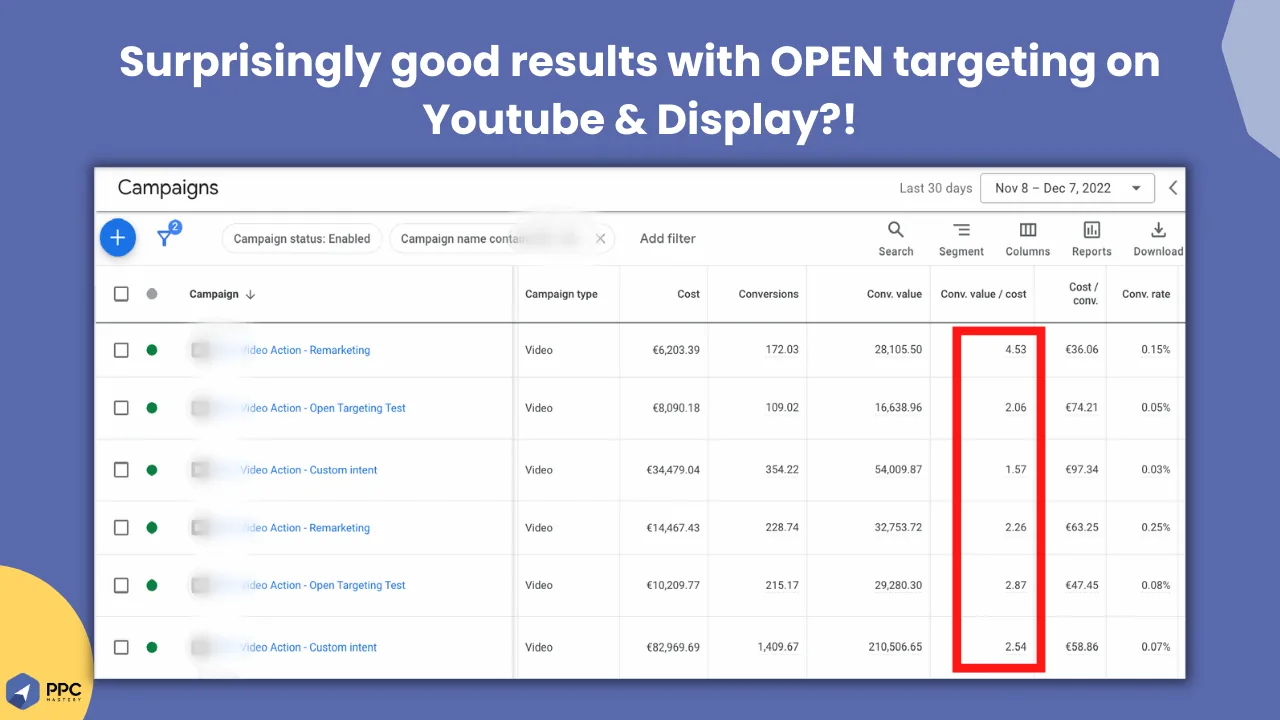
Recently, we’ve been getting surprisingly good results with open targeting on these channels.
That means: no audience targeting, let Google figure it out for you.
It sounds crazy because YouTube and Display have virtually limitless reach.
The last thing you want to do, is serve ads on low-value placements.
The best strategy to control where you spend goes, is with high-intent audiences.
But this year, we found out about a little-known strategy on YouTube/Display to scale super hard:
Open targeting (aka no audience targeting at all).
The results are amazing, and in a lot of cases open targeting is outperforming high-intent audience targeting…
(sometimes 30% higher ROAS)
Let’s break down how this strategy works, and let’s look at some real data from our accounts.
(and a big shoutout to Axel, Industry Manager at Google for his insights and next level YouTube strategies. truly one of the greats)
Open targeting strategy to scale super hard on YouTube and Display
This strategy is for advanced advertisers, definitely not for beginners with low budgets.
If you’re spending less than €1.000 per day on YouTube/Display, you’re probably better off targeting high-intent audiences.
But if you’re spending €1.000+ per day, open targeting could be a great test.
Once you have a good foundation, you can use open targeting campaigns to scale hard.
Your ad account has matured, and thus Google will be able to find your customers across a virtually limitless pool of prospects.
Just start small to validate the test idea, then scale once you see promising results.
This is the strategy:
-
Start with high-intent audiences
-
Scale with open targeting campaigns
-
Exclude low-value placements to protect efficiency
-
Use insights to target new high-intent audiences
Let me walk you through the strategy, step by step.
Step 1: Start with high-intent audiences
The goal of this newsletter is to give you an advanced strategy to deploy in your own accounts (open targeting), not to provide a complete strategy for YouTube and Display campaigns.
However, this first step is important because it gives some context to when you should or should not run open targeting campaigns.
The best strategy to get started with YouTube and Display campaigns, is by targeting high-intent audiences.
You can create custom segments based on people’s search behavior (specific search terms, websites, apps etc.).
Here’s an example of what that could look like for a doorbell company:
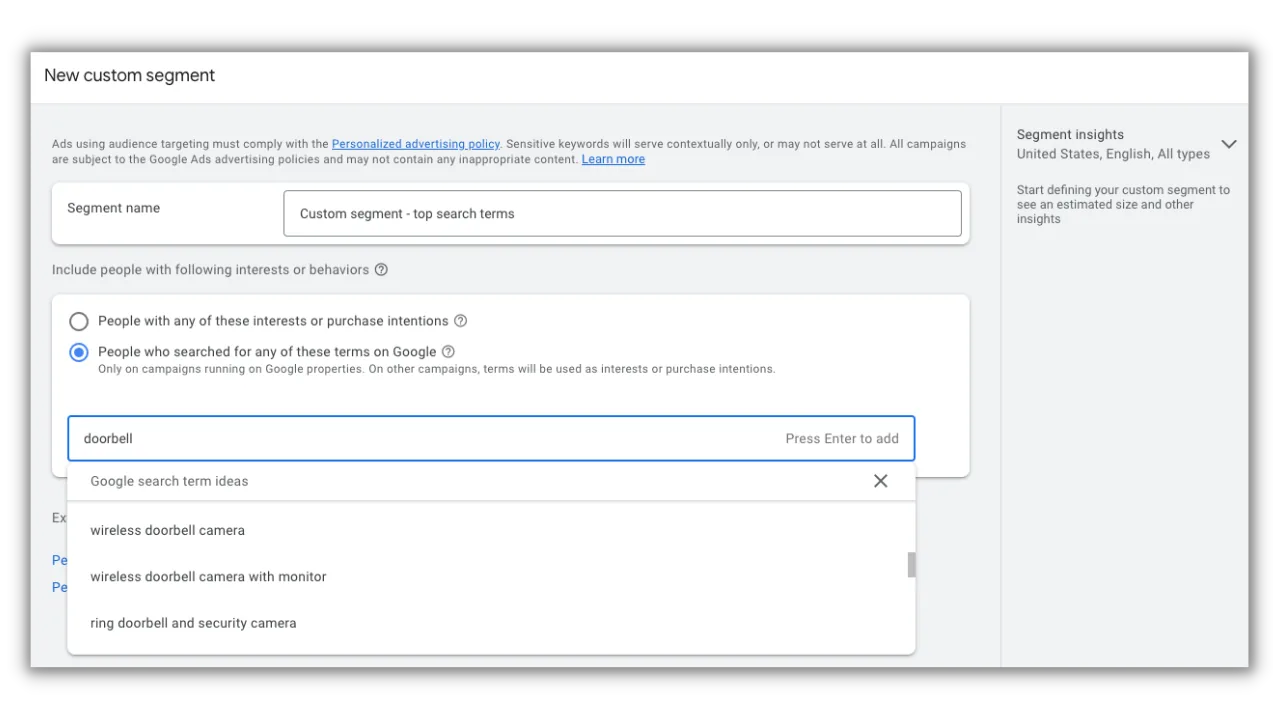
These audiences are great, because you’re targeting people with a specific search intent. They are potentially of high value, because they’ve demonstrated interest in a specific category or search term.
Let’s move on to step 2: scaling with open targeting campaigns.
Step 2: Scale with open targeting campaigns
After you’ve successfully tested and scaled high-intent audiences, you can look ahead and start experimenting with different audience types or open targeting.
The setup is extremely simple: just launch a new campaign with 1 ad group and NO audience targeting.
Leave everything up to Google.
Let’s look at some surprising data from our accounts.
YouTube: up to 31% higher ROAS on open targeting than high-intent audience targeting
This specific account ran YouTube campaigns in two countries. In both countries, we saw a ROAS uplift on open targeting campaigns.
Here’s the data:
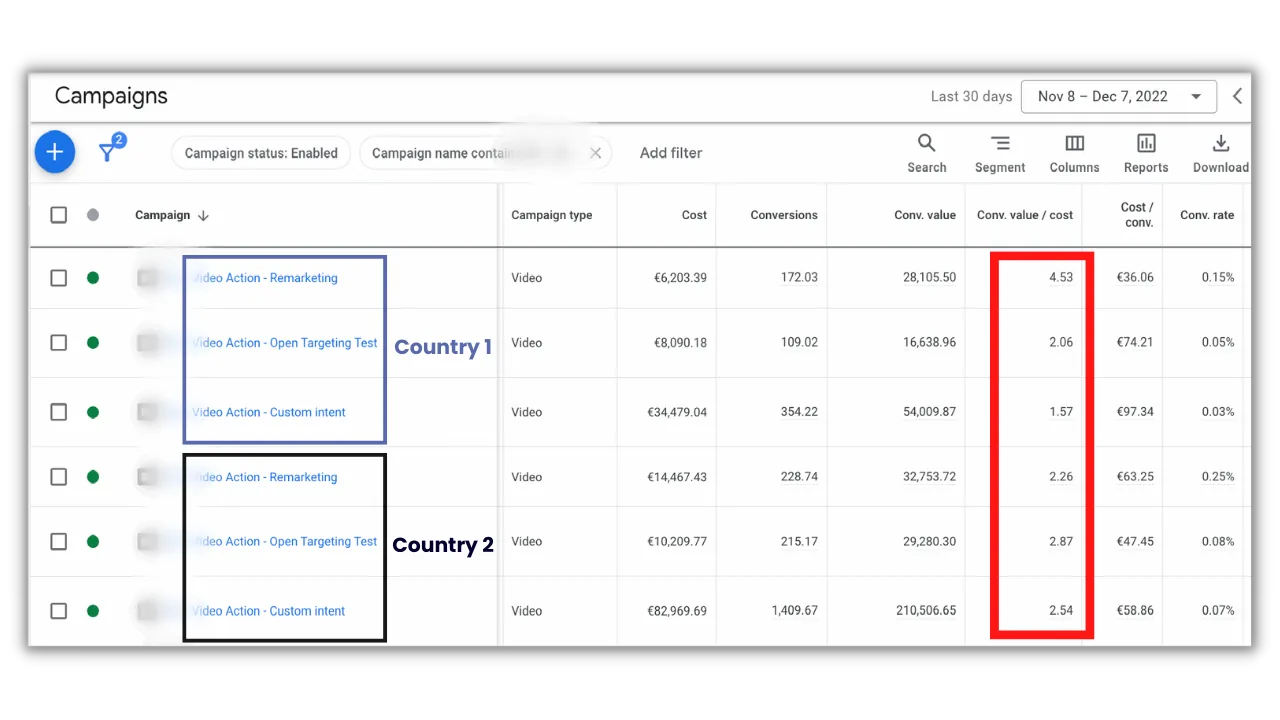
Country 1: +31% ROAS
Country 2: +27% ROAS
Display: 80% higher ROAS on open targeting than high-intent audience targeting
The data of these Display campaigns is trustworthy, but needs to be taken with a grain of salt because there’s a lot less data than on the YouTube campaigns.
Nevertheless, open targeting also performed really well on Display, with a ROAS uplift of 80%:
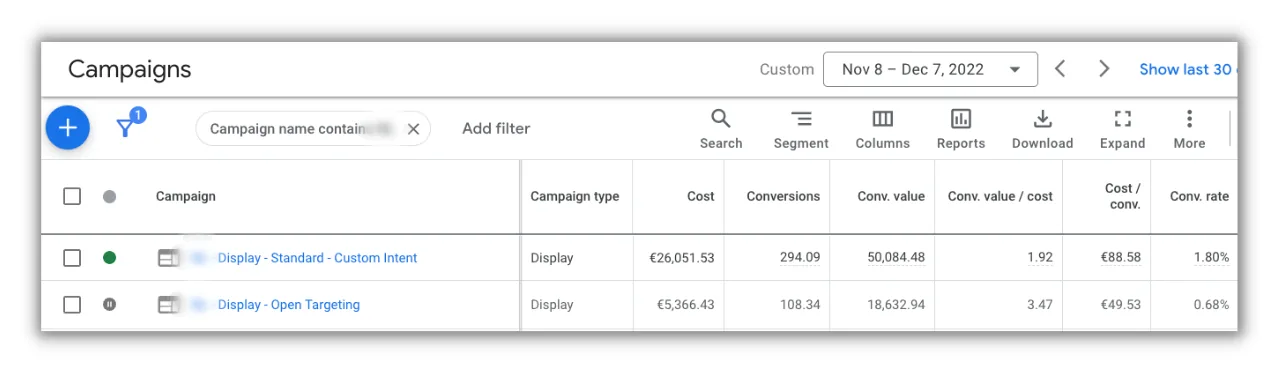
A note: the ROAS will most likely go down as we scale the spend, but the initial results look promising.
Step 3: Exclude low-value placements to protect efficiency
The danger of open targeting is that Google will spend your budget on low value placements. That’s why you need to exclude the following:
- Kids channels
- Low performing placements
- All apps (unless they perform well)
- Placements with relatively high bounce rates
- Low-value placements that indicate bot activity
You really need to do this to protect your efficiency.
Now on to the final step of this strategy.
Step 4: Use insights to target new high-intent audiences
The last step of this strategy is to use the insights tab to find new audiences that you can test.
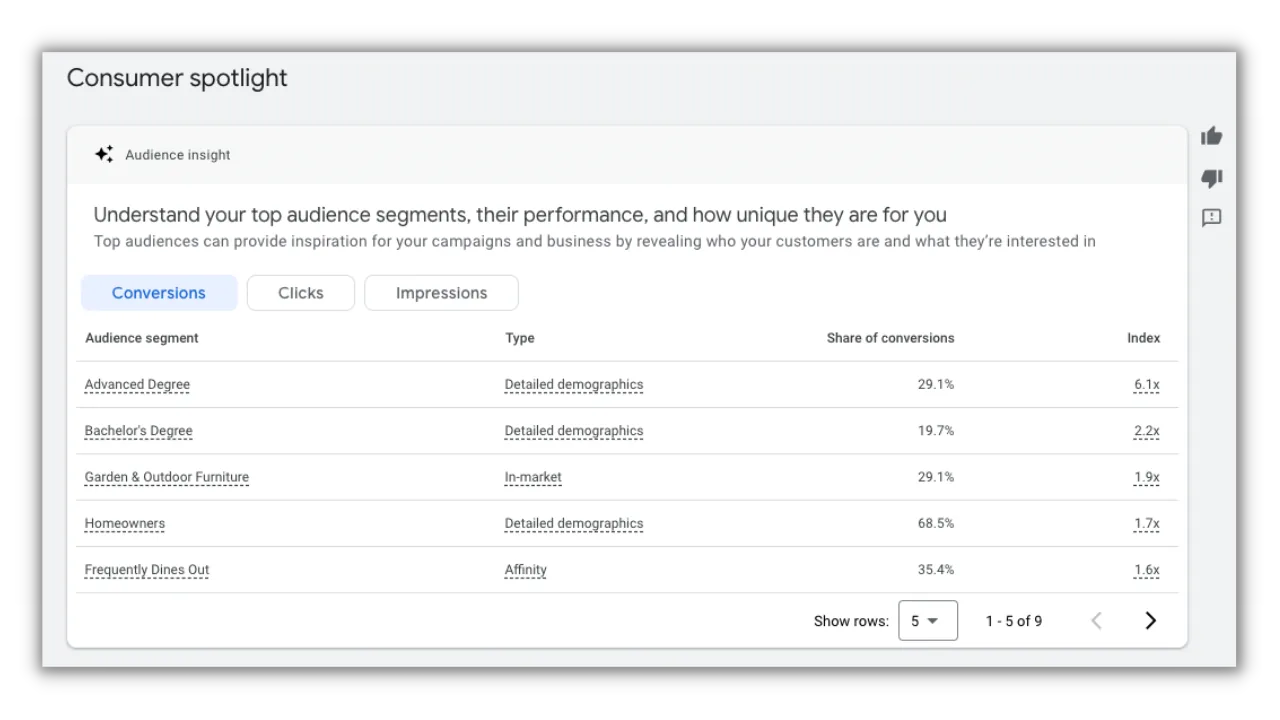
Here’s how it works:
- Go to your insights tab
- Scroll down to consumer spotlight
- Test audiences with a high index in a separate campaign
These insights are super valuable and can unlock additional audiences for you to target.
At first, many of these audiences might seem irrelevant or random, but just give them a try.
You’ll be surprised by how they can perform.
TLDR summary
If you’re an advanced advertiser, open targeting campaigns on YouTube and Display could unlock a lot of additional scale:
-
Start with high-intent audiences
-
Scale with open targeting campaigns
-
Exclude low-value placements to protect efficiency
-
Use insights to target new high-intent audiences
And that’s a wrap.
Happy testing and see you again next week!
Bob & Miles